The Best Fluffy Pancakes recipe you will fall in love with. Full of tips and tricks to help you make the best pancakes.


Food Tour in Colombo: When people think of Colombo, the first images that come to mind are often its colonial buildings, bustling streets, and the beautiful coastline along the Indian Ocean. But for us, the true character of Sri Lanka’s capital revealed itself through its food.
Our Food Tour in Colombo wasn’t about ticking famous restaurants off a list. It was about wandering through the lively lanes of Pettah Market, tasting colourful pickles from roadside vendors, sipping fresh wood apple shakes, watching traditional sweets being prepared by hand, enjoying one of the world’s most celebrated crab dishes, and ending the journey with comforting Sri Lankan classics served in heritage restaurants. Along the way, we discovered that Colombo’s food is a reflection of the island’s rich history, shaped by Sinhalese, Tamil, Muslim, Malay, Dutch Burgher, Portuguese, and British influences.
What made the experience even more special was exploring the city with local food enthusiast Muditha, whose passion for Colombo’s culinary traditions introduced us to places we would almost certainly have missed on our own. From hidden market stalls to family-run sweet makers and iconic restaurants, every stop revealed another layer of Sri Lanka’s vibrant food culture.
If you’re planning a trip to Sri Lanka and wondering what to eat in Colombo, this guide brings together the highlights of our journey into one complete culinary experience. Whether you’re a street food lover, a seafood enthusiast, or someone who enjoys discovering the stories behind traditional recipes, this Food Tour in Colombo will help you experience the city one delicious bite at a time.
Plan Your Food Tour in Colombo
Everything You Need to Know Before You Go
| Quick Information | Details |
|---|---|
| Duration | 1 Full Day (8–10 Hours) |
| Best Time to Visit | Morning to Evening |
| Ideal For | Food Lovers, Families, Couples & Solo Travellers |
| Approximate Budget | Budget to Luxury (LKR 2,000–50,000+ per person depending on your choice of restaurants) |
| Must-Visit Food Stops | Pettah Market, Traditional Sweet Makers, Ministry of Crab, Upali’s Restaurant, Dutch Burgher Union |
| Must-Try Dishes | Kottu Rotti, Appa, Jaffna Mutton Varuval, Lamprais, Crabzilla, Aasmi, Palm Jaggery |
| Nearest Landmark | Colombo Fort & Pettah |
| Getting Around | Tuk-tuks, taxis, ride-hailing apps, or a guided food tour |
| Best Experience | Explore with a local guide to discover hidden food spots beyond the popular tourist areas |
Why Every Traveller Should Take a Food Tour in Colombo
Colombo is much more than Sri Lanka’s commercial capital—it’s also one of South Asia’s most fascinating food destinations. For centuries, merchants from India, Arabia, Europe, and Southeast Asia arrived on these shores, bringing with them ingredients, cooking techniques, and culinary traditions that gradually blended with local flavours. The result is a cuisine that feels both familiar and refreshingly unique.
One of the things we loved most was how often Sri Lankan food reminded us of Kerala. Coconut, curry leaves, seafood, rice, and spices form the foundation of many dishes in both regions. Yet subtle differences in spice blends, cooking methods, and local ingredients give Sri Lankan cuisine its own unmistakable identity. A plate of Kottu may remind you of Tamil Nadu’s Kothu Parotta, Appa resembles our Appam, and Puttu looks familiar too—but each carries flavours that are distinctly Sri Lankan.
A Food Tour in Colombo is also about experiencing contrasts. Within a single day, you can snack on freshly fried samosas from a tiny stall in Pettah Market, watch artisans prepare traditional sweets using age-old techniques, savour a luxurious seafood feast at the internationally acclaimed Ministry of Crab, and finish with Lamprais—a dish inherited from the Dutch Burgher community that tells the story of Sri Lanka’s colonial past.
Most importantly, a guided food walk takes you beyond the tourist attractions. Instead of simply visiting places, you begin to understand the people behind the food—the vendors who have perfected the same recipes for decades, the families preserving traditional sweets, and the chefs who have elevated Sri Lankan ingredients onto the global culinary stage.
That’s exactly what our journey through Colombo offered, and it all began in one of the city’s oldest and busiest neighbourhoods—Pettah Market.
Pettah Market: Where Colombo’s Food Story Begins
Every great food city has a place where its culinary traditions come alive, and in Colombo, that place is Pettah Market. Long before modern shopping malls and fine-dining restaurants appeared across the city, Pettah was already the beating heart of commerce, where traders from different communities gathered to exchange spices, textiles, fresh produce, and, of course, food.
Even today, walking through Pettah is a sensory adventure. Narrow streets buzz with vendors calling out to customers, colourful displays of fruits and vegetables spill onto the sidewalks, the aroma of freshly fried snacks fills the air, and every few steps reveal another stall selling something delicious. It’s chaotic, noisy, and wonderfully authentic—exactly the kind of place where a memorable Food Tour in Colombo should begin.
Our morning started near one of Colombo’s most photographed landmarks, the striking Red Mosque (Jami Ul-Alfar Mosque). With its distinctive red-and-white striped façade and unique Indo-Islamic architecture, the mosque has welcomed traders and travellers for more than a century. Standing in its shadow, it was easy to understand why Pettah has always been a melting pot of cultures and cuisines.
From there, we simply followed the aromas drifting through the market streets. Unlike a structured restaurant crawl, this part of our Food Tour in Colombo was all about curiosity. We stopped wherever something looked interesting, sampled foods we had never tasted before, and chatted with vendors who proudly introduced us to local favourites. That spontaneous approach led us to some of the most memorable flavours of our entire Sri Lanka journey.
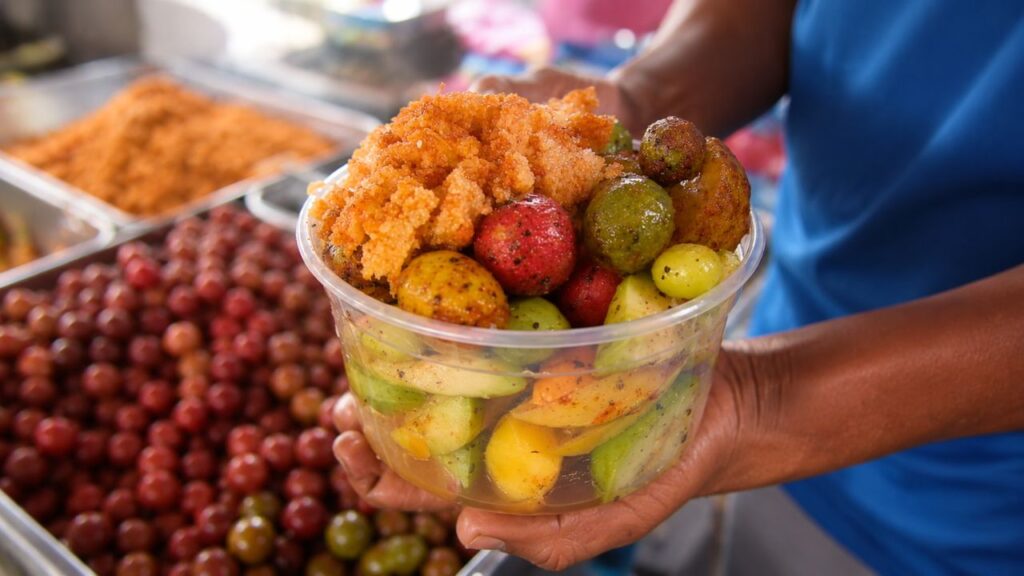
The first surprise came from a humble pickle vendor, whose stall was overflowing with colourful jars of fruits and vegetables preserved in spices and vinegar. Mangoes, star gooseberries, guavas, pineapples, wild mangoes, coffee plums, and many other seasonal produce had all found their way into his pickling jars. While most of them were delightfully tangy and addictive, the wood apple pickle was one flavour that didn’t quite win us over—proof that discovering new cuisines is as much about unexpected surprises as it is about finding new favourites.
A Pickle Stall Full of Surprises
The first stop on our walk was a humble roadside pickle stall, but the colourful display instantly caught our attention. We expected to see the usual mango and lime pickles. Instead, almost every fruit and vegetable imaginable had found its way into jars of spices and vinegar.
There were pickled mangoes, star gooseberries, guavas, pineapples, wild mangoes, coffee plums, and several local fruits that were completely new to us. Each had its own balance of sweetness, sourness, and spice, making it difficult to stop tasting just one.
Most of the pickles were absolutely delicious. The only one that didn’t quite suit our palate was the wood apple pickle. It had an unusual flavour that was quite different from anything we had tried before. But that’s exactly what makes travelling rewarding—not every flavour has to become your favourite. Sometimes, simply discovering something new is part of the experience.
For anyone who enjoys experimenting with local flavours, these pickle stalls are among the most interesting food stops in Pettah Market.
Crispy Snacks That Felt Surprisingly Familiar
No visit to Pettah Market is complete without stopping at one of its busy snack shops. Behind the glass displays were trays filled with golden fried delicacies that looked remarkably similar to snacks we enjoy back home in Kerala.
We began with a freshly fried chicken samosa, which turned out to be wonderfully crisp with a flavourful filling. Next came an egg roll, shaped almost like a samosa but stuffed with a hard-boiled egg and spicy masala. It was simple, comforting, and incredibly satisfying.
One member of our group also tried the beef patties. While it wasn’t everyone’s favourite, that’s part of any good food journey—you discover dishes you love and others that simply don’t match your personal taste.
What stood out most was how familiar these snacks looked, yet how differently they tasted. The spices, fillings, and textures reflected Sri Lankan preferences while still reminding us of the culinary traditions shared across South India and Sri Lanka.
Cooling Off with a Wood Apple Shake
After walking through Pettah’s bustling streets, we were ready for something refreshing. We stopped at a juice shop that was popular for its fresh fruit juices and milkshakes, but instead of ordering something familiar, we decided to try a drink we’d never tasted before—a wood apple shake.
Wood apple is a fruit commonly found in Sri Lanka, with a hard shell protecting a soft, aromatic pulp inside. The shake combined the fruit with generous scoops of vanilla ice cream, creating a drink that was both sweet and slightly tangy.
It wasn’t just refreshing; it was also one of those flavours that immediately reminded us why we love travelling. Every destination has ingredients that locals take for granted but feel completely new to visitors. The wood apple shake was one such discovery, and we would happily order it again.
Why Are They Called “Bombay Sweets”?
One thing that immediately caught our attention in Pettah Market was the number of shops carrying the name “Bombay Sweets.” At first, we assumed they specialised in Indian sweets imported from Mumbai. But as we explored further, we realised these shops had become an integral part of Sri Lanka’s own sweet-making tradition.
Historically, Indian traders, particularly from western India, played an important role in introducing many confectionery techniques to Sri Lanka. Over time, the name “Bombay Sweets” became synonymous with sweet shops themselves, even though many of the recipes evolved locally.
We sampled a vibrant green pista halwa, and while it instantly reminded us of Kerala’s famous halwa, the texture and sweetness had their own Sri Lankan character. Nearby, we also tried falooda, which surprised us by being much lighter than the rich versions we’re used to in India. Rather than a thick dessert, it was almost like a refreshing milk-based drink, making it perfect for Colombo’s warm weather.
These little discoveries reminded us that even familiar foods can tell a different story when prepared in another country.
The Rhythm of Colombo’s Kottu Rotti
If there is one sound that defines the streets of Colombo after sunset, it is the rhythmic clang of two metal spatulas striking a hot iron griddle.
That unmistakable sound announces the preparation of Kottu Rotti, one of Sri Lanka’s most beloved street foods.
Made by chopping flaky godamba roti into bite-sized pieces and stir-frying it with vegetables, eggs or meat, spices, and curry, Kottu is both a meal and a performance. Watching experienced cooks rapidly chop and toss the ingredients with astonishing speed is almost as entertaining as eating the dish itself.
We had tasted Kothu Parotta in Tamil Nadu before, so naturally we couldn’t resist comparing the two. While the concept was similar, Colombo’s version had its own personality. The flavours felt deeper, the spices more rounded, and the texture was softer than what we were accustomed to.
Before leaving Pettah, we picked up a few local favourites, including crispy murukku and colourful jelly candies, ending our market walk on a sweet note.
Looking back, Pettah Market wasn’t just our first stop on this Food Tour in Colombo—it was the perfect introduction to the city’s culinary soul. Every street, every vendor, and every bite reflected Colombo’s rich cultural diversity, setting the stage for the many unforgettable food experiences that still awaited us.
Traditional Sri Lankan Sweets: A Taste of Celebration
While Colombo’s bustling streets introduced us to the city’s vibrant street food culture, our next stop revealed a sweeter side of Sri Lanka. Guided once again by Muditha, we travelled to a small traditional sweet-making unit on the outskirts of Colombo, where some of the country’s most loved festive delicacies are still prepared by hand.
One of the first sweets we encountered was Aasmi, a delicate, crispy snack that immediately caught our attention with its intricate lace-like appearance. Made from a thin batter and deep-fried into a beautiful net, Aasmi is often enjoyed during Sinhala and Tamil New Year celebrations. Just before serving, the sweet is drizzled with warm palm jaggery syrup, adding a rich caramel-like sweetness that perfectly complements its crisp texture. It was unlike anything we had tasted before.
Another traditional favourite was Konda Kavum (also known as Oil Cake). At first glance, it reminded us of Kerala’s Neyyappam, but the similarities ended there. Prepared using rice flour, treacle, and spices, Konda Kavum has its own distinctive flavour and texture, making it a cherished festive snack across Sri Lanka.
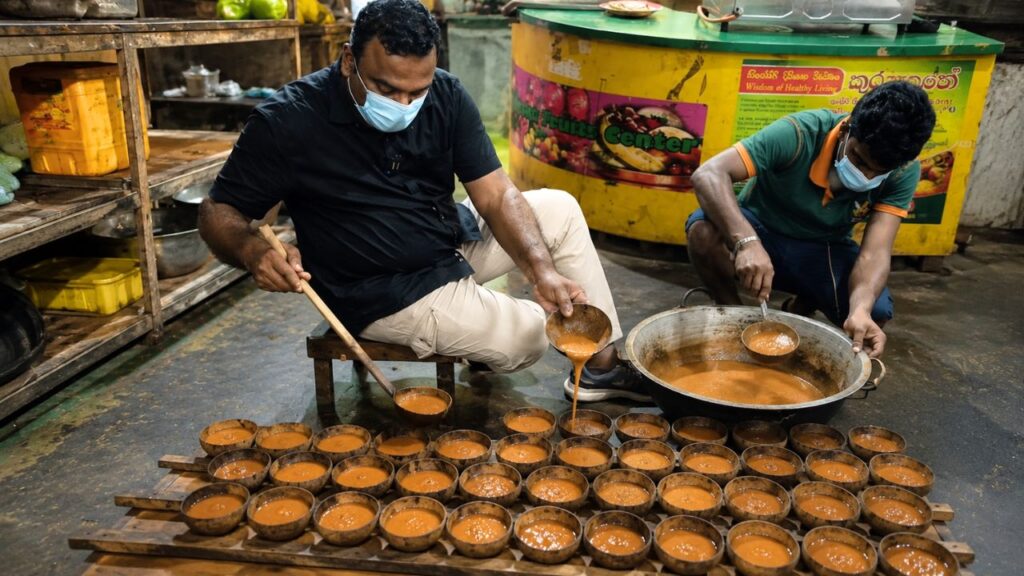
The experience became even more memorable when we watched fresh palm jaggery being prepared. Large quantities of palm sap were slowly boiled over wood fire until they thickened into a rich golden syrup. While the experts handled most of the process, they happily invited me to pour the hot syrup into coconut shell moulds, where it would cool and harden into traditional palm jaggery. It was a simple task, but one that gave me a deeper appreciation for the skill and patience behind this centuries-old craft.
More than the sweets themselves, what stayed with us was the warmth of the people who welcomed us into their workplace. They patiently explained each step of the process, encouraged us to participate, and proudly shared recipes that have been passed down through generations.
For us, this wasn’t just another food stop during our Food Tour in Colombo. It was a glimpse into Sri Lanka’s culinary heritage, where traditional recipes continue to thrive through the hands of families who have preserved them for decades. Sometimes, the sweetest memories of a journey come not just from what you eat, but from the people who lovingly prepare it.
Ministry of Crab: Colombo’s Most Celebrated Seafood Experience
No Food Tour in Colombo would feel complete without visiting Ministry of Crab, one of Sri Lanka’s most celebrated restaurants. Located within the historic Dutch Hospital precinct, the restaurant has earned international recognition for showcasing the country’s world-famous lagoon crabs.
What makes Ministry of Crab even more interesting is the story behind it. The restaurant was co-founded by Sri Lankan cricket legends Kumar Sangakkara and Mahela Jayawardene, together with renowned chef Dharshan Munidasa. Their vision was simple—to create a restaurant that celebrates the finest Sri Lankan seafood while maintaining world-class culinary standards.
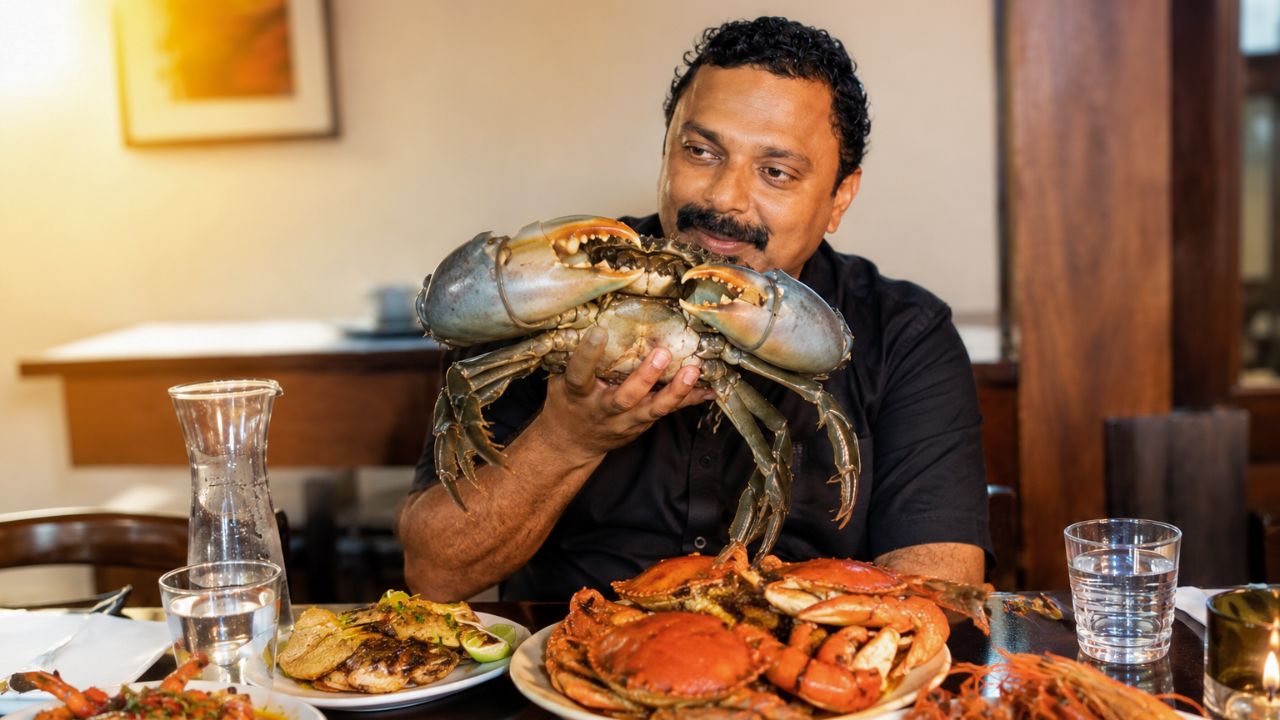
Naturally, we couldn’t resist trying their signature attraction—Crabzilla. Weighing over two kilograms, it is the largest crab served on the menu and is an experience as much as it is a meal. Watching the enormous crab arrive at the table was impressive enough, but the real surprise was its incredibly sweet, succulent meat. Every bite reflected the freshness and quality that Ministry of Crab is known for.
Another dish that won us over was the restaurant’s famous OMG Prawns. Cooked in a rich buttery sauce, the prawns were perfectly tender, and the flavour lingered long after the meal was over. Even today, it’s one of the standout seafood dishes we remember from Sri Lanka.
We also sampled the Crab Liver Pâté, served with fatteh and palm syrup—a combination that was both creative and unexpectedly delicious.
There’s no denying that dining at Ministry of Crab is expensive compared to many other restaurants in Colombo. However, if you appreciate exceptional seafood and want to experience one of Asia’s most acclaimed restaurants, we believe it’s worth including in your itinerary. It may not be an everyday meal, but it’s certainly one you’ll remember long after your trip is over.
Upali’s Restaurant: A Traditional Sri Lankan Breakfast
While Colombo offers everything from bustling street food stalls to world-renowned fine dining, we also wanted to experience the kind of food that locals enjoy every day. For that, we headed to Upali’s by Nawaloka, one of the city’s most popular restaurants for authentic Sri Lankan cuisine.
Breakfast here felt surprisingly familiar, especially for us as travellers from Kerala. The menu featured dishes that looked almost identical to some of our favourites back home, yet each had its own Sri Lankan character.
We began with Appa, the Sri Lankan version of appam. It had the same bowl-like shape that we’re familiar with in Kerala, but the edges were noticeably crispier, giving it a delightful texture. The Egg Appa, with a perfectly cooked egg in the centre, was equally satisfying and paired beautifully with the accompanying curries and sambols.
Next came Puttu, another dish that instantly reminded us of home. Made with steamed rice flour and coconut, it looked very similar to Kerala puttu, but the curries served alongside it brought distinctly Sri Lankan flavours to the table. The generous use of spices and traditional sambols added a depth that made the meal feel both familiar and refreshingly different.
One dish we were particularly eager to try was Jaffna Mutton Varuval. Although we had originally planned to visit Jaffna during our Sri Lanka trip, an unexpected railway strike forced us to change our itinerary. Thankfully, Upali’s offered us the opportunity to experience one of Jaffna’s most celebrated dishes right here in Colombo.
The mutton was cooked in a rich blend of roasted spices that gave the dish its signature flavour. We found the meat slightly chewier than what we’re used to in Kerala, but the bold seasoning more than made up for it. It was a wonderful introduction to the distinctive flavours of northern Sri Lanka, where Tamil culinary traditions have shaped a cuisine that’s noticeably different from the rest of the island.
We also sampled Orotti, a rustic flatbread commonly enjoyed in Sri Lankan homes. Simple yet satisfying, it paired wonderfully with the curries and completed a breakfast that offered a genuine taste of everyday Sri Lankan cooking.
Dining at Upali’s reminded us that some of the best travel experiences don’t come from trying the most unusual dishes, but from discovering how familiar foods take on a completely new identity in another country. It was comforting, flavourful, and easily one of the most memorable breakfasts of our Sri Lanka journey.
Lamprais: A Colonial Legacy Wrapped in Banana Leaf
Our final stop on this Food Tour in Colombo took us to the historic Dutch Burgher Union, a place well known for preserving one of Sri Lanka’s most iconic heritage dishes—Lamprais.
At first glance, Lamprais reminded us of Kerala’s pothichoru. Like our banana leaf meal, it arrives neatly wrapped in a banana leaf, allowing the flavours to blend together as it gently steams inside. But once unwrapped, it reveals a dish with a fascinating history.
The name Lamprais is believed to have originated from the Dutch word lomprijst, meaning “a packet of rice.” It was introduced by the Dutch Burgher community during the colonial era and has since become one of Sri Lanka’s most cherished comfort foods. Traditionally, the meal consists of fragrant rice accompanied by meat curry, brinjal moju (eggplant pickle), seeni sambal, ash plantain, and a variety of other side dishes, all wrapped together in a banana leaf before serving.
We enjoyed every bite, especially because many of the accompaniments were unlike anything we had tasted before. The sweet and caramelised seeni sambal paired beautifully with the savoury curries, while the ash plantain added another layer of flavour and texture. Although the concept felt familiar, the combination of ingredients created a meal that was unmistakably Sri Lankan.
It was a fitting way to conclude our culinary journey through Colombo. From the lively streets of Pettah Market and traditional sweet makers to world-famous seafood and comforting home-style cuisine, every stop had revealed a different chapter in the city’s rich food story. Lamprais brought those influences together on a single plate, making it the perfect finale to an unforgettable Food Tour in Colombo.
15 Must-Try Foods in Colombo
If you’re short on time and wondering what to eat during your visit, these are the dishes that stood out the most during our Food Tour in Colombo. Together, they offer a wonderful introduction to the city’s diverse culinary traditions.
| Dish | Where We Tried It |
|---|---|
| Kottu Rotti | Pettah Market |
| Chicken Samosa | Pettah Market |
| Egg Roll | Pettah Market |
| Pickled Fruits | Pettah Market |
| Wood Apple Shake | Pettah Market |
| Halwa | Pettah Market |
| Falooda | Pettah Market |
| Aasmi | Traditional Sweet Maker |
| Konda Kavum (Oil Cake) | Traditional Sweet Maker |
| Palm Jaggery | Traditional Sweet Maker |
| Crabzilla | Ministry of Crab |
| OMG Prawns | Ministry of Crab |
| Appa (Hoppers) | Upali’s Restaurant |
| Jaffna Mutton Varuval | Upali’s Restaurant |
| Lamprais | Dutch Burgher Union |
Exploring Colombo with a Local Food Expert
One of the biggest reasons this food journey turned out to be so memorable was because we explored Colombo with Muditha, a passionate local who introduced us to places that we would probably never have discovered on our own. From the lively streets of Pettah Market to traditional sweet makers and some of the city’s best restaurants, his recommendations helped us experience Colombo through the eyes of a local rather than as tourists.
If you’re planning a Food Tour in Colombo and would like a similar experience, you can get in touch with Muditha at +94 71 635 5865. He can help you explore Colombo’s culinary scene beyond the usual tourist attractions.
Final Thoughts
Our Food Tour in Colombo was far more than a journey from one restaurant to another. It became an introduction to Sri Lanka’s history, culture, and people through the universal language of food.
What fascinated us most was the beautiful balance between familiarity and discovery. As travellers from Kerala, we often found ourselves saying, “This reminds us of home,” only to discover subtle differences in flavours, spices, and cooking techniques that gave every dish its own Sri Lankan identity. Whether it was the bustling energy of Pettah Market, the craftsmanship behind traditional sweets, the unforgettable seafood at Ministry of Crab, or the comforting flavours of a home-style breakfast, every experience added a new chapter to our understanding of Sri Lankan cuisine.
If you’re visiting Colombo, don’t just plan your itinerary around monuments and museums. Leave room for unexpected food stalls, conversations with local vendors, and meals that tell stories passed down through generations. Those moments often become the memories that stay with you long after the journey ends.
As we left Colombo, we carried home much more than photographs and videos. We returned with new flavours to remember, new friendships to cherish, and a deeper appreciation for a city that welcomed us with warmth, generosity, and some truly unforgettable food.